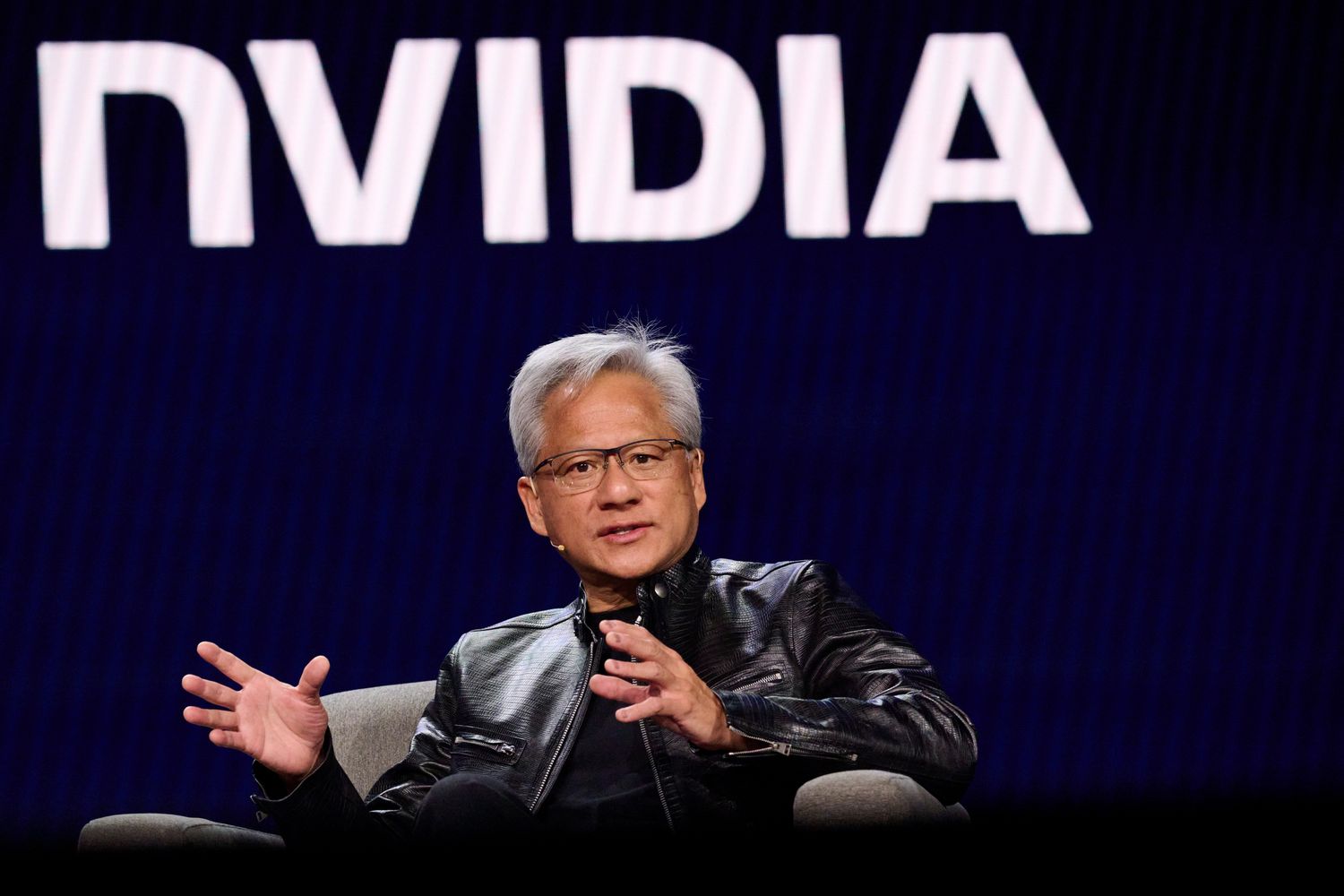
Nvidia's AI Dominance: Why Hyperscalers Keep Investing Big
In the rapidly evolving landscape of artificial intelligence, one name consistently rises above the rest: Nvidia. The semiconductor giant, once a poster child for the initial AI craze, is not just maintaining its lead; it's solidifying its position as the undisputed powerhouse driving the AI revolution. Recent analyses, particularly from financial titans like Morgan Stanley, highlight why Nvidia continues to be the favorite chip stock among institutional investors, even amidst market fluctuations and whispers of competition.
Despite occasional periods of skepticism, the fundamental drivers behind Nvidia's success remain robust. Hyperscale cloud providers, the colossal engines of the internet like Microsoft and Amazon, aren't just dabbling in AI; they are making foundational, multi-year commitments to Nvidia's technology. This unwavering investment isn't merely a trend; it's a strategic imperative that underpins Nvidia's enduring dominance and suggests a much longer runway for growth than many perceive.
The Resurgent King: Why Nvidia is Again the 'Favorite Chip Stock'
Nvidia's journey on Wall Street has been a bellwether for the broader AI market. After a brief period where memory device makers like Sandisk (now part of Western Digital) and Micron took the spotlight due to surging data center storage demand, Nvidia has reclaimed its throne as Morgan Stanley’s top semiconductor pick. This isn't just a casual nod; it's a strong endorsement rooted in a combination of attractive valuation and renewed conviction in the company's future trajectory. For many, Nvidia remains the benchmark for AI innovation and market performance, cementing its status as the "nvidia favorite chip stock" among analysts.
A key factor cited by Morgan Stanley is Nvidia's forward price-to-earnings (P/E) ratio of 18x. In a market often characterized by inflated tech valuations, this figure is seen as a "surprisingly good entry point." For a company at the forefront of a paradigm-shifting technology like AI, an 18x forward P/E suggests that much of the future growth potential isn't yet fully priced in, offering a compelling opportunity for investors. This valuation signals that while the company has seen significant appreciation, there's still considerable room for growth driven by sustained AI adoption and advancements. To dive deeper into this valuation perspective, check out Nvidia Stock Outlook: Is 18x P/E an Unmissable Entry Point?
The sentiment driving this renewed confidence isn't just about financial metrics; it's about the undeniable and escalating demand for Nvidia's AI accelerators. These GPUs are the engines powering the complex computations required for everything from large language models to advanced scientific research, making them indispensable for any entity serious about AI development.
Dispelling Doubts: Hyperscalers' Unwavering Commitment to AI Infrastructure
One of the primary concerns that have pressured Nvidia's shares recently revolved around the speculation that major hyperscalers, such as Microsoft (MSFT) and Amazon (AMZN), might already be at peak spending for AI infrastructure. The theory suggested that these tech giants might slow down their investments, potentially impacting Nvidia's revenue streams. However, industry analysis, backed by concrete evidence, strongly refutes this notion.
Morgan Stanley analysts point to several compelling reasons why hyperscalers are not only likely to maintain but even *increase* their AI investments. Firstly, these companies have immense financial flexibility. They can readily tap into financial markets for fresh capital, a common practice for funding large-scale infrastructure projects. Secondly, and perhaps more importantly, their rapidly expanding cloud computing businesses are generating substantial revenues, much of which can be reinvested directly back into building out more robust AI capabilities. This creates a powerful feedback loop: more cloud services mean more revenue, which fuels more AI investment, leading to even more advanced cloud services.
Perhaps the most convincing piece of evidence comes from the purchasing behavior of these hyperscalers. They are reportedly paying in full, upfront, for multi-year memory supply orders, some extending up to three years. This isn't the behavior of companies planning to slow down; it's the action of entities making long-term strategic bets. As analysts provocatively ask, "Are they doing that with the intent of slowing spending next year?" The clear implication is no. There is simply no indication that the current investment cycle has run its course; instead, there is plenty of evidence suggesting that these major spenders intend to keep investing heavily for at least the next few years. This sustained demand is critical for understanding why Nvidia remains the "nvidia favorite chip stock."
Nvidia's Unassailable Moat: Market Share and the Future Roadmap
Another area of market skepticism has centered on potential competition and market share erosion. While competitors like Advanced Micro Devices (AMD) and custom chip designers such as Broadcom (AVGO) are indeed growing, and some might even exhibit faster growth rates this year, this phenomenon needs to be viewed in context. Nvidia's dominance in the AI chip market is staggering, capturing an estimated 85% of all AI chip revenue. When a market leader holds such an overwhelming share, even significant percentage growth from smaller players still represents a relatively minor dent in the overall landscape.
The growth difference isn't primarily driven by competitors releasing products that are superior to Nvidia's offerings, but rather by the sheer scale of Nvidia's existing market penetration. Its "moat" isn't just about hardware; it's built on the strength of its CUDA software ecosystem, developer tools, and a consistent history of innovation that makes switching costs incredibly high for businesses deeply integrated into the Nvidia platform. This comprehensive ecosystem creates a powerful competitive advantage that is difficult for rivals to replicate quickly.
Looking ahead, Nvidia's annual GPU Technology Conference (GTC) plays a crucial role in allaying Wall Street's market share worries. The conference typically offers a comprehensive look into Nvidia's multi-year roadmap, akin to the detailed four-year plan unveiled in 2024. These deep dives into future innovations and strategic directions reassure investors that Nvidia is not resting on its laurels but is continually pushing the boundaries of AI technology. These revelations confirm that the race for AI supremacy is a marathon, and Nvidia has a clear, long-term strategy to stay in the lead, reinforcing its position as the "nvidia favorite chip stock."
Investment Insights: Navigating the Cycle of Skepticism
Nvidia's stock performance over the past three years reveals a striking pattern: the beginning of each year is often met with skepticism about the year ahead, only for that skepticism to be dispelled as visibility fills in and the strength of demand becomes undeniable. Each time, this resolution of doubt has led to bursts of outperformance for the stock. This historical trend offers valuable insight for current and prospective investors.
While analysts acknowledge that eventually, this pattern of initial skepticism followed by renewed strength might break, they generally don't believe this year is "the one." For investors considering Nvidia, understanding this cyclical nature of market sentiment is crucial. Practical advice would be to look beyond short-term anxieties and focus on the fundamental drivers: the insatiable demand for AI, hyperscalers' strategic investments, and Nvidia's formidable technological lead and ecosystem advantage. Rather than timing the market precisely, a long-term perspective focused on these core strengths often yields better results when investing in a company like Nvidia, which is a foundational component of a transformative technological shift.
Conclusion
Nvidia's position at the vanguard of the AI revolution remains unchallenged, with strong indicators pointing to sustained growth and demand. The renewed confidence from financial experts like Morgan Stanley, highlighted by an attractive valuation and a deep understanding of market dynamics, underscores why Nvidia continues to be the "nvidia favorite chip stock." The unwavering commitment of hyperscale customers, evidenced by their long-term, upfront investments, dispels concerns about a spending slowdown. Coupled with Nvidia's dominant market share and its clear, ambitious product roadmap, the company is poised to extend its lead in the AI era. For investors and industry watchers alike, Nvidia represents not just a chip maker, but the very infrastructure upon which the future of artificial intelligence is being built.